In the industry, you often hear people say: “Buying used equipment is risky.” “You never know what you're getting.” “A used machine is a gamble.” In reality, it's not the machine that's the problem...
In the industry, you often hear people say: “Used equipment is risky.” “You never know what you're getting into.” “A used machine is a gamble.” In reality, it's not the machine that's the problem. It's the conditions under which it was selected, inspected, and integrated. And that's precisely where most failures occur.
The real problem: buying a machine… without buying the expertise
A machine may look flawless on paper but become a headache in your workshop if:
- its history is incomplete
- no actual testing has been performed
- compliance has not been verified
- integration has not been planned
- its automation systems are not compatible with your production line
Under these conditions, even a brand-new machine can become a problem. It’s not the opportunity itself that’s risky. It’s buying blindly. This is what we see most often in the field.
A recent example: a technically perfect machine, well-maintained, compliant… but impossible to integrate because the discharge height did not match the existing line. Result: major modifications, delays, and additional costs. The machine itself was not the issue. It was the lack of an integration analysis that brought everything to a standstill.
Integration: The Most Underestimated Factor
A machine may be high-performing, reliable, and compliant… yet completely incompatible with your production flow. The most common mistakes include: incompatible input/output heights, mismatched cycle times, lack of communication between automation systems, non-compliant operator safety, overly complex cleaning or maintenance, and poor ergonomics. A poorly integrated machine costs more than a new one. Not in purchase price, but in downtime, modifications, delays, and risks.
Used equipment: a much more reliable market than people think
In the pharmaceutical, food, and cosmetics sectors, many machines are: originally oversized, rarely used to full capacity, replaced for strategic (rather than technical) reasons, and maintained to high standards. The used equipment market is full of machinery that still performs very well. The potential is real… provided you know how to select the right equipment.
What a professional refurbishment changes
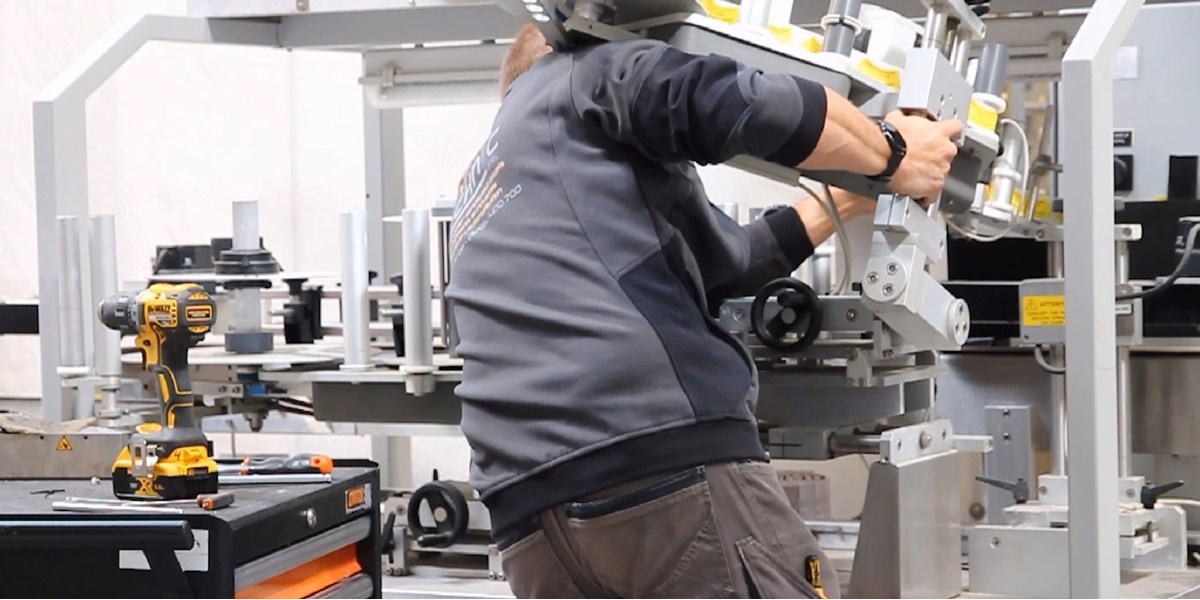
A professional refurbishment isn’t just “cleaning and repainting.” It involves: inspecting every critical point, replacing wear parts, testing the machine under load, verifying compliance, adapting the equipment to your process, documenting everything, and providing support during startup. You aren’t just buying a machine. You’re buying risk management.
4 Key Points to Verify Before Making a Purchase
Actual technical condition: technical condition, including wear and tear, critical components, automation systems, wiring, and maintenance history.
Compliance: CE standards, operator safety, documentation, and industry-specific requirements. Ignoring this point can delay the start of production.
Adaptability to your production line: dimensions, flow, cycle time, automation compatibility, ergonomics.
Testing: an untested machine = an unknown quantity. And in production, an unknown quantity is costly.
Buying used isn’t a gamble. Lacking expertise is.
In a context where every line stoppage is costly, the real question isn’t: “How much does the machine cost?” but: “How much does uncertainty cost me?” A reconditioned, tested, and adapted used machine is not a compromise. It is a strategic decision.
Want to see reconditioned, tested used machines ready to integrate into your line?
Discover our current selection in the catalog.